**
A condo balcony is one of the most valued features of urban living until winter arrives, and it becomes an afterthought. In Canada, where temperatures can drop well below freezing for months at a time, taking the right steps to winterize condo balcony canada protects your investment, extends the life of your outdoor furniture and finishes, and can even keep the space usable longer than you might expect. Here is a practical guide to getting your balcony ready before the cold sets in.
Check Your Building's Rules First
Before making any changes to your balcony, review your condo corporation's rules around balcony use and modifications. In most buildings, balconies are exclusive-use common elements, meaning you have the right to use them, but the corporation retains ownership and sets the rules around what can be stored, installed, or modified on them. Some buildings restrict the use of outdoor rugs, certain types of storage containers, heaters, or enclosures. Knowing the rules before you start prevents a compliance issue after you have already spent money on winterization.
Protect and Store Your Furniture
Outdoor furniture left exposed to a Canadian winter takes a beating. Freeze-thaw cycles, snow accumulation, and prolonged moisture exposure degrade most materials, cushion fabric mildews, metal frames rust, and wood cracks and warps when left unprotected.
Cushions and Fabric
Remove all cushions and fabric elements before the first frost and store them indoors in a closet, a storage locker, or under a bed. Even cushions marketed as weather-resistant deteriorate faster when left outside through a full Canadian winter. Clean them before storing to prevent mildew from developing during months of indoor storage.
Furniture Frames
If you have the interior storage space, bringing furniture frames inside is the best option. If space does not permit, invest in high-quality, waterproof furniture covers that fit snugly and are secured against wind. Lightweight covers that blow off in the first November storm offer almost no protection. Look for covers with tie-down straps or weighted hems designed for the wind exposure common on high-rise balconies.
Protect Your Balcony Flooring

Balcony flooring, whether it is interlocking deck tiles, composite boards, or bare concrete, needs attention before winter. These are some of the most practical condo balcony winter tips for preserving the surface underfoot.
Deck Tiles and Wood Surfaces
Interlocking wood or composite deck tiles should be lifted, cleaned, and stored indoors if possible. Water trapped beneath tiles freezes, expands, and can crack the tiles or damage the concrete slab underneath. If storing them inside is not practical, at a minimum, stack and cover them to prevent water pooling beneath each tile through the winter months.
Concrete Slabs
Bare concrete balconies benefit from a thorough cleaning before winter. Remove any debris that could trap moisture against the surface and inspect for existing cracks through which water can enter, freeze, and expand. If your balcony has a drain, confirm it is clear of debris before freeze-up. A blocked drain that causes standing water to freeze is a common source of balcony surface damage.
Protect Your Plants
Tender plants left on a balcony through a Canadian winter will not survive. Bring any plants you want to keep indoors before overnight temperatures drop consistently below freezing. Hardy perennials in containers may survive if the containers are large enough to insulate the root mass and are moved to a sheltered corner of the balcony but this is a gamble in most Canadian climates, and bringing them inside is always the safer choice. Drain and store any ceramic or terracotta pots that could crack from freeze-thaw cycles.
Winter Condo Balcony Ideas for Year-Round Use
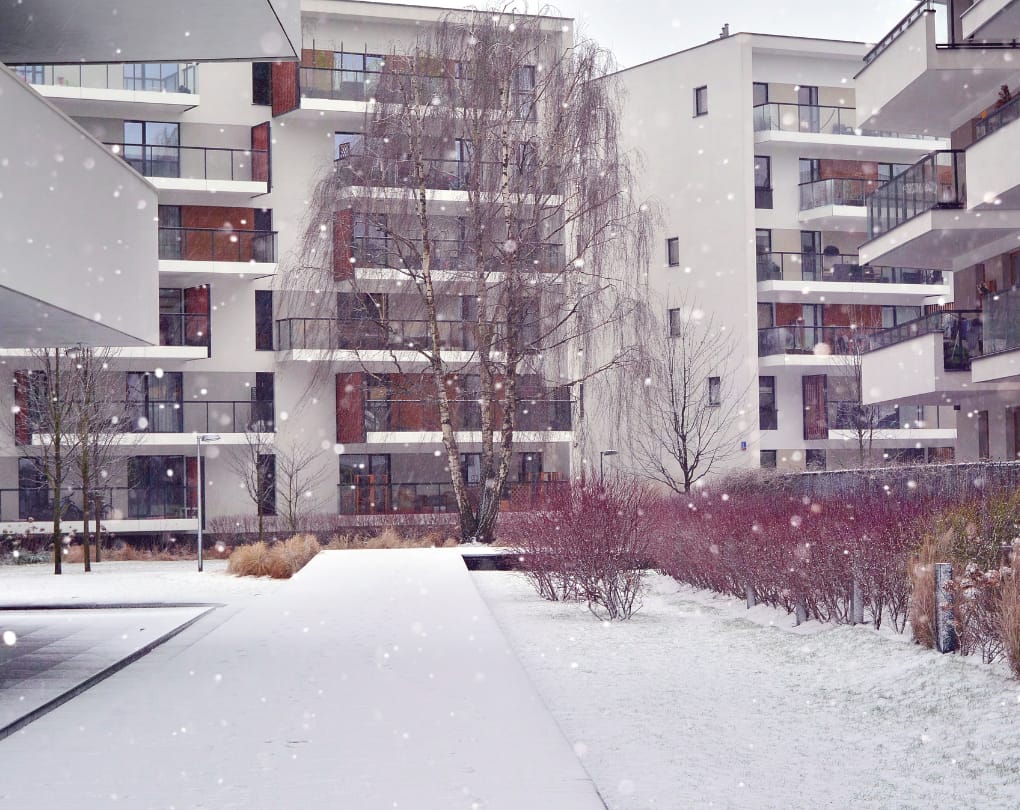
Winterizing does not have to mean abandoning your balcony entirely. With the right approach, a condo balcony can remain a usable outdoor space well into the cold months and these winter condo balcony ideas Canada make that possible.
Outdoor Heaters
A freestanding electric patio heater can extend comfortable balcony use by weeks on either side of winter, and well into mild winter days. Confirm with your building's management that electric heaters are permitted; most buildings allow them, but propane heaters are commonly restricted due to fire safety concerns. Position heaters away from railings and any stored items, and never leave them unattended.
Weather-Resistant Textiles
A heavy outdoor blanket or throw kept in a weatherproof storage box on the balcony makes spontaneous cold-weather use far more comfortable. Pair with an insulated beverage container, and even a January morning coffee on the balcony becomes a realistic proposition rather than an endurance test.
Winter Planters
Evergreen branches, pinecones, and winter-hardy ornamental plants like ornamental kale can keep a balcony visually alive through the grey months without the risk of losing plants you care about. A simple arrangement in a frost-resistant planter adds colour and life to a space that might otherwise look bare from November through March.
A Quick Pre-Winter Checklist
Before the cold arrives, work through these final steps to complete your winterize condo balcony canadapreparation: remove and store all cushions and fabric, cover or store furniture frames, lift and store deck tiles, clear the balcony drain, bring in or protect plants, drain ceramic pots, and do a final sweep of any loose items that could become a hazard or cause damage in high winds. A balcony that is properly put to bed for winter requires far less repair and replacement come spring, and that makes the hour or two it takes entirely worth it.


