
Yes, you can buy a home with a reverse mortgage in Canada if you are 55 or older and purchasing a primary residence. Through a reverse mortgage purchase program, you provide a large down payment, typically 45–60% of the purchase price and the reverse mortgage covers the remaining balance. No monthly mortgage payments are required. The loan is repaid when the home is sold, you move out permanently, or the last borrower passes away.
This strategy is commonly used by retirees who want to downsize, relocate, or eliminate ongoing mortgage payments while maintaining cash flow in retirement. Downsizers should also walk through the standard questions to ask before buying a condo — many apply whether the next home is freehold or a condominium.
A helpful explanation of how reverse mortgages operate in Canada can be found through the government’s consumer financial education resources.
Can You Buy a Home With a Reverse Mortgage in Canada?
Yes. Certain Canadian lenders offer reverse mortgage programs specifically designed for purchasing a new home.
Unlike a traditional reverse mortgage, where you borrow against a home you already own, this structure is built into the purchase transaction. The reverse mortgage funds a portion of the home, reducing or eliminating the need for monthly payments.
To qualify, you must:
- Be at least 55 years old
- Use the property as your primary residence
- Provide a substantial down payment
- Meet lender underwriting and property appraisal requirements
This option is not available for rental or investment properties.
How the Reverse Mortgage Purchase Process Works
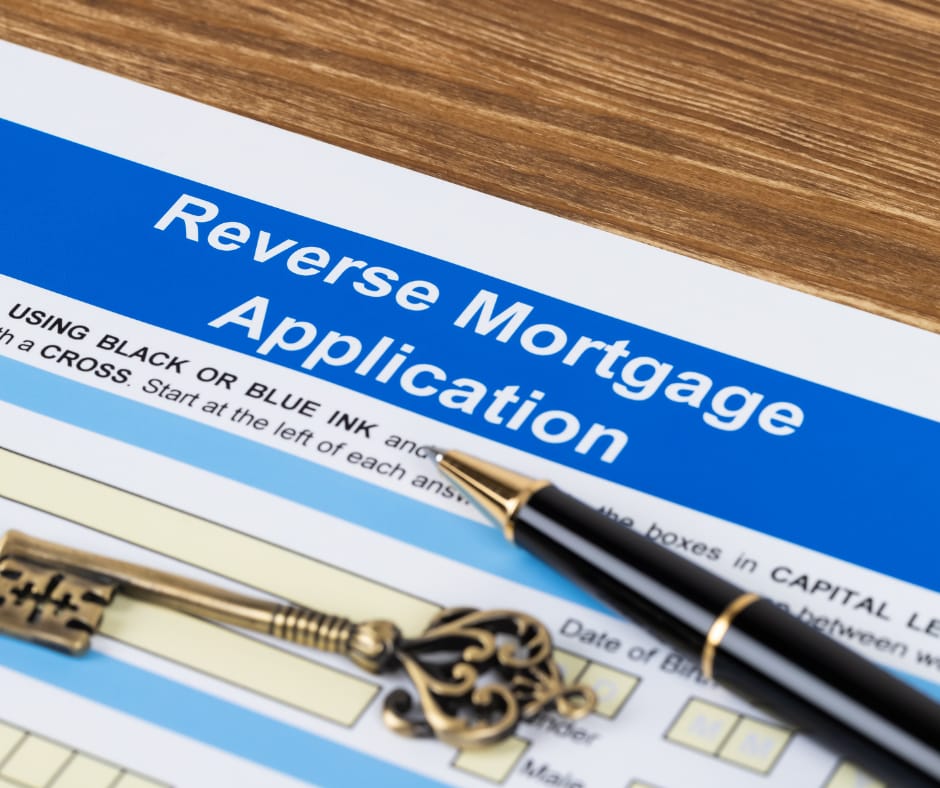
Step 1: Review Available Equity or Cash
Most buyers use proceeds from selling their current home to fund the required down payment. However, you can also use savings or other liquid assets.
Because the required down payment is high, planning is critical.
Step 2: Provide a Large Down Payment
When you buy a home with a reverse mortgage in Canada, you typically contribute 45–60% of the purchase price upfront.
For example:
- Home price: $800,000
- Down payment (50%): $400,000
- Reverse mortgage funds: $400,000
The exact borrowing percentage depends largely on age. Older borrowers may qualify for slightly higher funding amounts.
One example of a Canadian reverse mortgage lender offering purchase programs is CHIP Reverse Mortgage.
Step 3: Reverse Mortgage Covers the Remaining Balance
The reverse mortgage lender funds the remaining portion of the purchase. Unlike a conventional mortgage, you are not required to make monthly principal or interest payments.
Interest accrues on the outstanding balance and compounds over time.
Step 4: Maintain the Property
Although no mortgage payments are required, you must:
- Live in the home as your primary residence
- Maintain the property in good condition
- Pay property taxes and homeowner's insurance
Failure to meet these obligations could trigger loan repayment.
Step 5: Repayment Occurs Later
The reverse mortgage becomes due when:
- The home is sold
- You move out permanently (such as entering long-term care)
- The last borrower passes away
The loan is repaid from the home’s sale proceeds.
How Much Can You Borrow?
The amount you can borrow when you buy a home with a reverse mortgage depends on several factors:
- Your age
- The home’s appraised value
- The property type and location
- Current lender policies
In most cases, borrowers qualify for between 40% and 55% of the home’s value.
For context on traditional mortgage requirements in Canada, national housing guidance on mortgage lending and homebuyer requirements explains how standard lending practices and mortgage structures work.
Because there are no required payments, lenders require significant equity upfront to reduce risk.
Advantages of Buying With a Reverse Mortgage
No Required Monthly Payments
The biggest advantage is the elimination of mandatory mortgage payments. This can significantly improve retirement cash flow.
Preserve Investments and Savings
Instead of using all available funds to purchase the home outright, buyers retain liquidity for retirement expenses or investment opportunities.
Reduced Income Qualification Pressure
Approval is based more heavily on property value and borrower age rather than strict income ratios.
Non-Recourse Protection
In Canada, reverse mortgages are generally non-recourse loans. You will never owe more than the fair market value of the home at repayment, even if the loan balance grows larger.
Risks to Consider
Compounding Interest
Because no payments are made, interest compounds over time. The loan balance can grow substantially if the home is held for many years.
Reduced Estate Value
The increasing loan balance reduces the amount of equity left to heirs.
Higher Interest Rates
Reverse mortgage interest rates are typically higher than standard mortgage rates.
Limited Future Refinancing
Switching lenders or restructuring the loan later may be more restrictive than traditional financing.
Reverse Mortgage Purchase vs Traditional Mortgage
| Feature | Reverse Mortgage Purchase | Traditional Mortgage |
|---|---|---|
| Monthly payments | Not required | Required |
| Down payment | 45–60%+ | Often 5–20% |
| Interest | Compounds | Amortized |
| Income requirements | Less emphasis | Income-based approval |
| Long-term equity | Decreases over time | Can grow with payments |
A traditional mortgage builds equity over time through payments. A reverse mortgage purchase prioritizes payment relief and liquidity.
Who Should Consider This Strategy?
Buying a home with a reverse mortgage in Canada may make sense if:
- You are downsizing from a larger property
- You want to eliminate monthly debt obligations
- You value retirement cash flow flexibility
- You plan to remain in the home long term
It may not be suitable if preserving maximum inheritance value is your primary objective.
Alternatives to Compare
Before deciding to buy a home with a reverse mortgage, consider alternatives such as:
- Purchasing outright with cash
- Taking a smaller traditional mortgage
- Using a HELOC temporarily
- Downsizing further to avoid borrowing
Running projected equity scenarios over 5, 10, and 15 years can help clarify the long-term impact.
Final Answer: Buying a Home With a Reverse Mortgage in Canada

You can buy a home with a reverse mortgage in Canada if you are 55 or older and able to provide a large down payment, typically 45–60% of the purchase price. The reverse mortgage covers the remaining balance and requires no monthly payments, but interest compounds over time and reduces future equity.
For retirees focused on improving cash flow rather than maximizing estate value, this strategy can provide flexibility and housing stability when structured correctly.
Frequently Asked Questions
Can you buy a home with a reverse mortgage in Canada?
Yes, you can buy a home with a reverse mortgage in Canada if you are 55 or older, and the property will be your primary residence. You must provide a large down payment, typically between 45–60% of the purchase price, and the reverse mortgage covers the remaining balance.
What is the minimum age to buy a home with a reverse mortgage?
The minimum age to buy a home with a reverse mortgage in Canada is 55. If there are two borrowers, eligibility is based on the youngest homeowner’s age.
How much down payment is required?
Most reverse mortgage purchase programs require a down payment of 45–60% of the home’s value. The exact percentage depends on age, property type, and lender guidelines. Older borrowers may qualify for a higher loan percentage.
Do you make monthly payments when buying with a reverse mortgage?
No, monthly mortgage payments are not required. However, you must continue to pay property taxes, insurance, and maintain the home. Interest accrues and compounds on the loan balance over time.
How is the reverse mortgage repaid?
The reverse mortgage is repaid when the home is sold, when you move out permanently, or when the last borrower passes away. The loan is typically paid from the proceeds of the home sale.
Can you use a reverse mortgage to buy an investment property?
No. In Canada, reverse mortgages can only be used to purchase a primary residence. They are not available for rental or investment properties.
Is buying a home with a reverse mortgage a good idea?
It depends on your financial goals. Buying a home with a reverse mortgage can improve retirement cash flow because no monthly payments are required. However, interest compounds over time and reduces future home equity, which may impact inheritance planning.


