
Picture two buyers standing at a crossroads. One is drawn to a cozy condo in the heart of the city, and the other is eyeing a detached house in a quiet suburb. Both are asking the same question: Is a condo cheaper than a house in Canada? Well, yes, but the full picture is more nuanced than a single price tag. Rising housing costs have pushed the condo vs. house debate to the forefront for first-time buyers, investors, and growing families alike. This article breaks down key price trends and helps you figure out which option may better suit your needs today.
Key Trends Shaping the Condo vs House Price Canada 2026
The price gap between condos and houses continues to shift across major Canadian cities, making it harder for buyers to rely on old assumptions. Buyers should understand current market trends before deciding which property type offers the best value for their money.
House Prices Continue to Rise Faster in Many Canadian Cities
Detached houses remain in short supply, especially in large cities, where available land for new development is limited.
Key reasons why house prices keep climbing:
- Limited land drives up cost. Land value plays a major role in pricing, and in dense urban areas, this cost is passed directly on to the buyer.
- Family demand stays strong. More families prefer houses for the extra space and privacy, which increases competition and pushes prices higher.
- Supply cannot keep up. In cities like Vancouver, the average detached house pricereached $2,048,968 in late 2025, reflecting how tight the inventory can be.
Condos Remain the Most Affordable Entry Point for Many Buyers
Condos typically cost less than detached houses, which makes them a popular choice for first-time buyers who need a more reachable price point. Smaller living spaces and shared building amenities help keep purchase prices lower than those for standalone homes. In many markets, buying a condo allows buyers to enter the property market sooner and start building equity while they save for a bigger purchase down the road.
Interest Rates and Mortgage Costs Affect the Condo vs House Cost Comparison Canada
Higher mortgage rates make large house loans more expensive to carry each month, which can put detached homes further out of reach for average buyers. Smaller condo loans may be easier to qualify for, especially since the total borrowed amount is lower. The Bank of Canada's policy rate currently sits at 2.25%, and forecasts suggest that national single-detached prices are projected toincrease by 2.0% by Q4 2026, while condo prices may dip another 2.5%.
Location Still Plays the Biggest Role in the Price Gap
Downtown areas have far more condos than houses, which affects how buyers search and what they find within their budget.
How geography shapes the price gap:
- Urban cores favour condos. City centres are dense, so condos dominate the listings available to downtown buyers.
- Suburbs lean toward houses. Suburban areas have more detached homes, which command higher prices due to larger lot sizes and more space.
- Local growth matters. Job market strength and population growth increase demand for both property types and can push prices up in either direction.
Condo vs House Cost Comparison Canada: Overview for Different Buyers
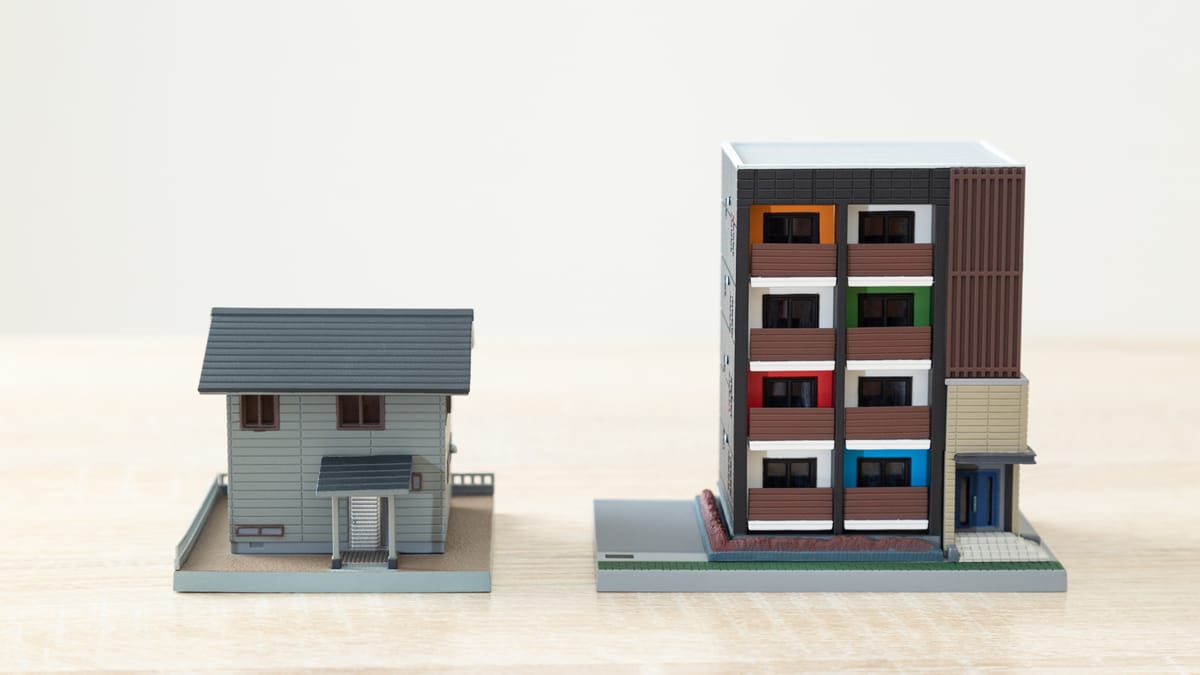
The answer to 'Is a condo cheaper than a house Canada?' depends on lifestyle, budget, and long-term plans. Each property type offers different benefits for different kinds of buyers, and understanding those differences can help you make a smarter choice.
Buy a Condo If You Want Lower Entry Costs and Simpler Maintenance
Condos require a smaller down payment than houses, making them more accessible for buyers just starting.
A closer look at why condos work for many buyers:
- Maintenance is handled for you. Exterior repairs and building upkeep are managed by the condo corporation, saving owners time and unexpected costs.
- Prices are more accessible. As of February 2026, the national average sellingprice of a condo in Canada was $469,300, compared to $735,000 for a single-family home.
- Works for many buyer types. Condos suit young professionals, investors, and first-time buyers who want to own property without taking on the full responsibilities of a house.
Condo prices vary widely depending on location and size. Studio and one-bedroom condos in mid-sized cities like Calgary can be found in the range of $250,000 to $400,000, while two-bedroom units in Toronto or Vancouver often range from $550,000 to over $750,000.
Buy a House If You Want More Space and Long-Term Flexibility
Houses offer larger living areas, private yards, and greater privacy, which many families find essential to their daily lives. Owners also have greater freedom to renovate, expand, or change the property without needing approval from a condo board. Families planning to stay in one place long term may benefit most from the extra space and flexibility a house offers.
In Toronto, detached houses averaged $1,325,654 in February 2026, while semi-detached homes averaged around $1,027,376. Outside Toronto and Vancouver, detached homes in cities like Calgary, Edmonton, and Montreal are more affordable, ranging from roughly $500,000 to $750,000, depending on the neighbourhood and property size.
Choosing Between a Condo and a House in Canada in 2026
The condo vs house price Canada 2026 comparison makes one thing clear: condos offer a more affordable entry point in nearly every major Canadian market, and that gap matters enormously for buyers on a set budget. While house prices are projected to rise modestly, condo prices in some cities are still correcting, giving buyers a timely window. Understanding this difference is the first step toward a housing decision that aligns with your financial reality.
Ultimately, the best choice depends on your budget, lifestyle needs, and long-term plans. Review your full financial picture carefully before committing, and compare the total cost of ownership, not just the purchase price, factoring in mortgage payments, maintenance fees, and property taxes. Overall, both condos and houses can be smart investments in Canada's 2026 market when matched to the right buyer.


