**
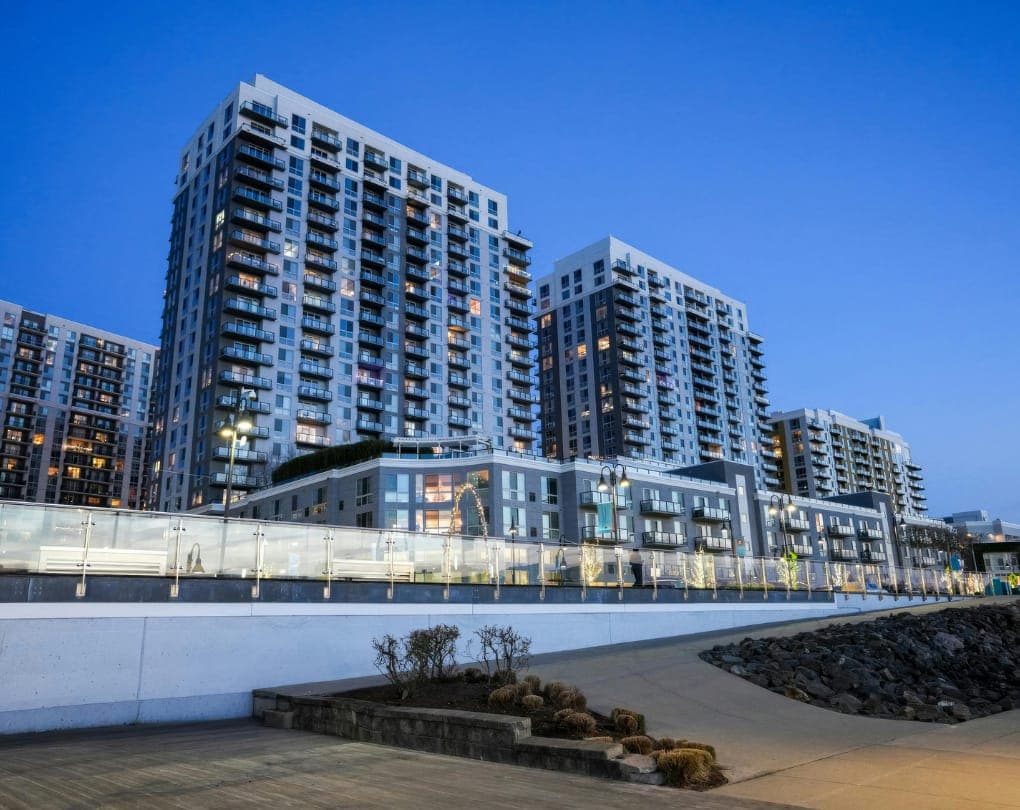
Canada's two largest condo markets are in the middle of one of the most significant supply corrections in recent memory. After years of record construction activity driven by investor demand and a booming pre-construction market, condo oversupply in Toronto and Vancouver has created conditions that are genuinely unusual by historical standards and that carry meaningful implications for buyers trying to decide whether to act now or wait. Understanding what drove the oversupply, where things stand today, and what the data suggests about the road ahead gives buyers the context they need to make informed decisions.
How the Oversupply Built Up
The current situation did not emerge overnight. It is the product of a construction cycle that peaked during the pandemic era, when low interest rates, surging immigration, and strong investor appetite drove presales of new condos to record levels across the Greater Toronto Area and Metro Vancouver. Developers launched projects aggressively, and investors purchased units in bulk, betting that rents and values would continue rising through the multi-year construction period.
When interest rates climbed sharply beginning in 2022, that calculus collapsed. Investors who had purchased units at peak prices found themselves facing closings on condos worth less than what they paid, with carrying costs far higher than anticipated. Many listed their units for sale or assignment, flooding the resale market with inventory at precisely the moment that buyer demand was contracting. The result was a supply-demand imbalance that has defined both markets heading into 2026.
The Small Unit Problem
The Bank of Canada has identified a specific structural issue making the condo inventory situation in Canada 2026 more complex: a significant mismatch between the types of units coming to market and the types of units buyers actually want. Micro units, those with three or fewer rooms, represent approximately 60 percent of new condo units entering the market, yet only around 30 percent of new households have the characteristics typically associated with buyers of those units. The cratering of international student numbers and reduced immigration, down from 1.4 million net newcomers in 2023 to under 300,000 between late 2024 and mid-2025, removed the primary tenant base that had sustained demand for small studio units in the first place.
Where Toronto Stands in 2026

The numbers for Toronto are stark. Condo oversupply in Toronto has pushed the sales-to-new-listings ratio to levels not seen since the 2009 recession, according to RBC Economics. TD Economics has forecast condo prices falling an additional 10 percent in 2025 alone, bringing total declines to 15 to 20 percent from the Q3 2023 peak. Re/Max estimates the GTA is still working through close to two years of condo inventory, with meaningful improvement in conditions unlikely before mid-2026.
New construction starts have collapsed in response. According to CMHC's Spring 2026 Housing Supply Report, condo starts in Toronto fell to their lowest per-capita level among Canada's seven largest cities, and according to the Bank of Canada, 2025 condo starts reached lows not seen since the 1990s. After a record approximately 29,300 condo completions across the Greater Toronto and Hamilton Area in 2025, completions are expected to drop to around 22,000 in 2026 and potentially below 10,000 annually by 2028. The pipeline is drying up fast.
Where Vancouver Stands in 2026
Greater Vancouver's condo market tells a similar story, though the numbers are somewhat less extreme. Condo sales in Metro Vancouver fell 11 percent year-over-year for the period between January and October 2025, while average prices declined nearly six percent to approximately $765,000, according to Re/Max. Elevated inventory and buyer hesitancy continue to define the market, with investors who were once a major demand driver largely sitting on the sidelines.
As with Toronto, the construction response has been swift. Developers have shelved or cancelled projects that cannot be financially justified at current presale prices, reducing the future supply pipeline considerably. Re/Max characterizes 2026 as a transition year for Vancouver rather than a turnaround. Improving conditions are expected to emerge gradually as inventory is absorbed, with healthier market dynamics anticipated in 2027.
What This Means for Buyers Right Now
For buyers who have been watching from the sidelines, the current state of too many condos in Canada translates into a set of concrete advantages that have not existed in these markets for years.
More Negotiating Power
With inventory elevated and days on market significantly longer than during the peak years, buyers have genuine negotiating leverage. Sellers, particularly investors carrying condos at negative cash flow, are often motivated to close deals. Conditions that were routinely waived during the 2020 to 2022 cycle, such as financing conditions and status certificate reviews, are back on the table in many transactions.
Price Declines Create Entry Opportunities
Buyers who were priced out of Toronto and Vancouver condo markets at their peak are finding that the correction has meaningfully improved affordability. Units that were trading at $750,000 to $800,000 in 2022 are available at considerably lower prices in 2025 and into 2026. For end-user buyers with stable employment and a long time horizon, purchasing during a correction rather than waiting for recovery has historically produced strong outcomes, provided the unit, the building, and the location are chosen carefully.
Focus on Size and Quality
Industry experts are consistent on one point for buyers navigating the current condo inventory Canada 2026 environment: prioritize larger, well-designed units over micro studios. True North Mortgage CEO Dan Eisner noted that quality condos of 750 square feet or more are where investors will move first when the market begins to recover, meaning those units are likely to lead any price rebound, while the glut of small studios absorbs more slowly. Buying a unit that will appeal to a broad range of future buyers or tenants protects long-term value in a way that a cramped studio simply cannot.
The Longer View: A Supply Cliff Is Coming
The paradox of the current oversupply is that the market correction is simultaneously creating the conditions for a future shortage. With construction starts at multi-decade lows and the development pipeline effectively frozen, the supply of new condos entering the market after 2026 will drop sharply. Industry analysts, CMHC, and major bank economists broadly agree that once the current inventory surplus is absorbed, a process expected to unfold gradually through 2026 and 2027, the lack of new supply will put upward pressure on prices again.
For buyers with a three-to-five-year time horizon, the case for purchasing during the current period of too many condos in Canada is not simply about catching a bottom; it is about buying before the supply cliff materializes and restores pricing power to sellers. The window where buyers hold the advantage in Toronto and Vancouver's condo markets is real, but based on current construction data, it is not indefinite.


