
It is one of the most misunderstood questions in Canadian condo law. Owners who find themselves in conflict with their board sometimes fear eviction, while boards dealing with seriously non-compliant owners wonder what their actual options are. The straightforward answer is that a condo board cannot simply evict an owner the way a landlord evicts a tenant, but that does not mean the corporation is powerless. Understanding what condo corporation eviction rights actually look like under Canadian law clarifies both what owners are protected from and what can happen in genuinely extreme circumstances.
Owners Are Not Tenants and That Distinction Matters
The fundamental reason a condo board cannot evict an owner in the conventional sense is that ownership and tenancy are legally different relationships. A tenant's right to occupy a property is granted by a landlord and can be terminated under landlord-tenant legislation. An owner's right to occupy their unit flows from the title they own to the property. No board resolution, bylaw, or compliance notice can unilaterally strip an owner of their title or their right to occupy a unit they legally own.
This means the question of whether a condo board evicts an owner in Canada has a clear baseline answer: not through any direct administrative action. The board cannot change the locks, restrict access to the unit, or issue an eviction notice the way a residential landlord can. Any attempt to do so would expose the corporation to serious legal liability.
What the Corporation Can Do Instead
While outright eviction is off the table, condominium corporations across Canada have a range of enforcement tools that can make life significantly more difficult for a non-compliant owner and, in the most serious cases, can result in a court order that effectively removes the owner from the building.
Compliance Orders and Fines
The first line of response to a rule-breaking owner is typically a written demand for compliance, followed by fines if the behaviour continues. In Ontario, the Condominium Act allows corporations to recover reasonable costs incurred in obtaining compliance from a non-compliant owner, including legal costs. Repeated violations can generate a trail of charges that accumulates against the unit and, if unpaid, can be registered as a lien in the same manner as unpaid common expenses.
Injunctions Through the Courts
For serious or persistent violations, harassment of neighbours, dangerous behaviour, repeated damage to common elements, or ongoing non-compliance despite warnings and fines, a condominium corporation can seek an injunction from the courts ordering the owner to stop the offending conduct. A court injunction is a legally binding order, and violating it constitutes contempt of court. This is a meaningful escalation with real consequences, and courts take injunction applications involving condo corporations seriously when the corporation can demonstrate a sustained pattern of non-compliance.
When Courts Can Order Possession

This is where the condo owner eviction Canada law becomes genuinely complex. In extreme cases, Canadian courts have the authority to order remedies that go beyond compliance, including, in rare circumstances, ordering the sale of a unit or granting possession of the unit to the corporation.
Ontario's Compliance and Remediation Powers
Under Ontario's Condominium Act, a court can order a wide range of remedies when an owner has seriously and repeatedly violated the corporation's governing documents or has caused significant harm to others in the building. In the most severe cases, typically involving dangerous behaviour, ongoing harassment, or wilful damage, a court has the power to order that the unit be sold. The owner receives the proceeds of the sale minus any amounts owed to the corporation, but they lose their ownership of the unit. This is the closest thing to a condo board evicting an owner in Canada in the legal sense, and it requires a court order, not a board decision.
Tenants Are a Different Matter
It is worth distinguishing between evicting an owner and evicting a tenant placed in a unit by an owner. When a condo owner rents out their unit, the tenant's occupancy is governed by provincial landlord-tenant legislation, not condo law. If a tenant is violating the building's rules, the corporation's primary recourse is to require the owner to address the tenant's behaviour. In Ontario, if the owner fails to do so, the corporation can take steps under the Residential Tenancies Act to address the tenancy, but this is a distinct process from anything involving ownership rights.
The Practical Reality for Owners and Boards
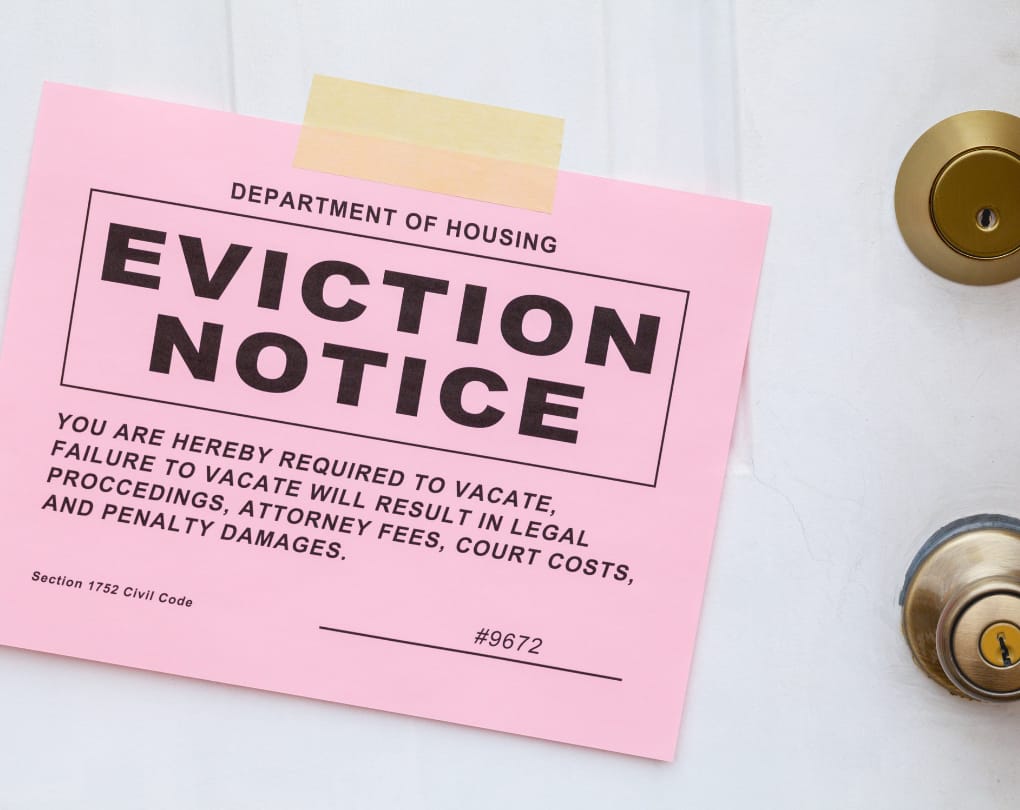
In practice, the scenario of a court ordering the sale of a condo unit due to owner misconduct is rare. It represents the end of a long escalation process that most disputes never reach. The vast majority of owner-corporation conflicts are resolved at the compliance notice or mediation stage, well before litigation becomes necessary.
For owners worried about condo owner eviction in Canada as a result of a dispute with their board, the realistic risk is not losing their unit; it is accumulating legal costs, compliance charges, and fines that can become financially burdensome if the conflict drags on. Resolving disputes through proper channels early, rather than digging in, almost always produces a better outcome.
For boards dealing with a genuinely disruptive or dangerous owner, the path forward is through documented compliance notices, legal counsel, and ultimately the courts if necessary, not through any attempt to restrict access or force an exit outside of due process. Condo corporation eviction rights are real but narrowly defined, and exercising them correctly requires following a legally sound process from start to finish.


